Rescue Helicopter Urges Trampers And Hunters To Take Precautions
19 March 2026
Hawke’s Bay Rescue Helicopter’s crew is urging anyone planning tramping or hunting trips around the region heading into the cooler months to invest in a Personal Locator Beacon (PLB) before setting out.
It follows 19 search and rescues undertaken by the service in 2025, including several incidents of trampers lost in dense bush.
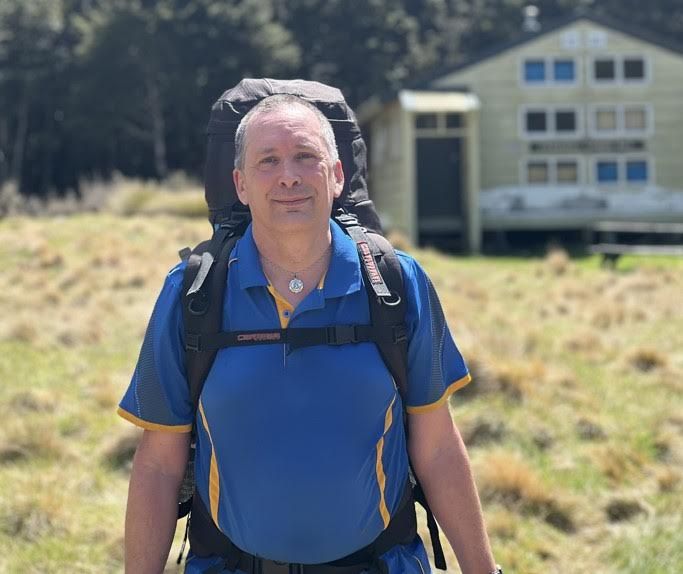
Local tramper John Sharpe has already ticked off three multi day tramps since January, but this time last year he recalls he nearly didn’t make it out of thick bush when his body started hallucinating.
As an experienced tramper, John recalls how quickly things took a turn for the worse and being stranded in remote bush alone felt like a frightening prospect.
“I had a five-day loop planned and have walked this area before – I have been tramping through the North Island for twenty or so years with no issues prior to this. I had a route planned with reasonable days, nothing too long or technical. Day one, two and three were all without any indication of issues or problems.
“Midway through day four it was becoming apparent something was “off “ – I began to struggle to achieve a sensible distance between breaks and felt very weary over a short period of time despite being well hydrated and eating well. Hallucinating there was a zebra on the path at one point really brought it home that I would likely be in a bad way if I managed to complete day four, and day five was really not looking good.”
John knew that if he collapsed he could be there for a significant length of time before being found, so activated his PLB. Within twenty minutes he heard the rescue helicopter overhead.
“Oh my lord the relief was palpable – the sound of the helicopter coming to get me really was like an angel from heaven coming to the rescue!”
Air Crew Officer, Michaela Horsefield winched John out that day and believes he was extremely lucky.
“Without a beacon, rescue efforts may not begin for 12–48 hours or longer, and search areas can be large, making it harder for teams to locate the person. Injured hikers may attempt self-rescue, but this can worsen injuries or expose them to risks such as hypothermia, dehydration, or infection. A PLB significantly improves survival chances by sending an exact GPS distress signal via the Cospas-Sarsat network to the Rescue Coordination Centre New Zealand, allowing us to respond quickly and go directly to the person’s location.”
Michaela says hallucinating while tramping is a significant red flag and usually indicates the brain is under physiological stress.
“In wilderness settings, symptoms like confusion, visual disturbances, extreme fatigue, or poor coordination should be treated as warning signs to stop, shelter, and consider calling for help. Carrying a PLB and listening to early body signals are key safety measures, especially during multi-day autumn tramps when conditions can change quickly.”
After a visit to the doctor and a diagnosis he was battling a lingering bronchial infection, John made a quick recovery and insists the experience has taught him a valuable lesson.
“The big learn is to listen to your body and to what it is telling you – if something doesn’t feel quite right or your body is not responding as it normally would then listen to it earlier rather than later. I always carry my PLB and plan carefully, check the weather, check the route and have contingencies in mind, making sure the route is comfortable and doable.”
Hawke’s Bay’s new Airbus H-145 D3 is scheduled to be in operation later this year and Rescue Helicopter Pilot, Bill Hartree expects it will competently complete missions like John’s.
“The new H-145’s advanced avionics, combined with increased automation and greater fuel endurance, will significantly enhance our ability to conduct rescues in remote and challenging locations. These improvements will allow crews to operate more efficiently and safely, particularly during long-duration missions or when responding to incidents in isolated areas. The aircraft’s enhanced capability ensures we can continue to provide timely and effective rescue support to individuals and communities that are often difficult to access.”
Irrespective of the helicopter’s advanced capability Bill emphasises a tramper’s best form of insurance is a locator beacon.
“I’m a keen hunter fisherman myself but one thing I never leave home without is a PLB. They’re an absolute lifeline.”
Hawke’s Bay’s Rescue Helicopter conducts around 400 lifesaving missions every year – made possible through essential Government funding combined with the generous support of local communities who provide grants, sponsorship and donations to sustain operations and assist in purchasing key equipment.